I Have Spoken — The History of Recipes As I Know It
Episode 1: The Hamburger — A Global Story in a Bun
By jerome amosMarch 29, 2026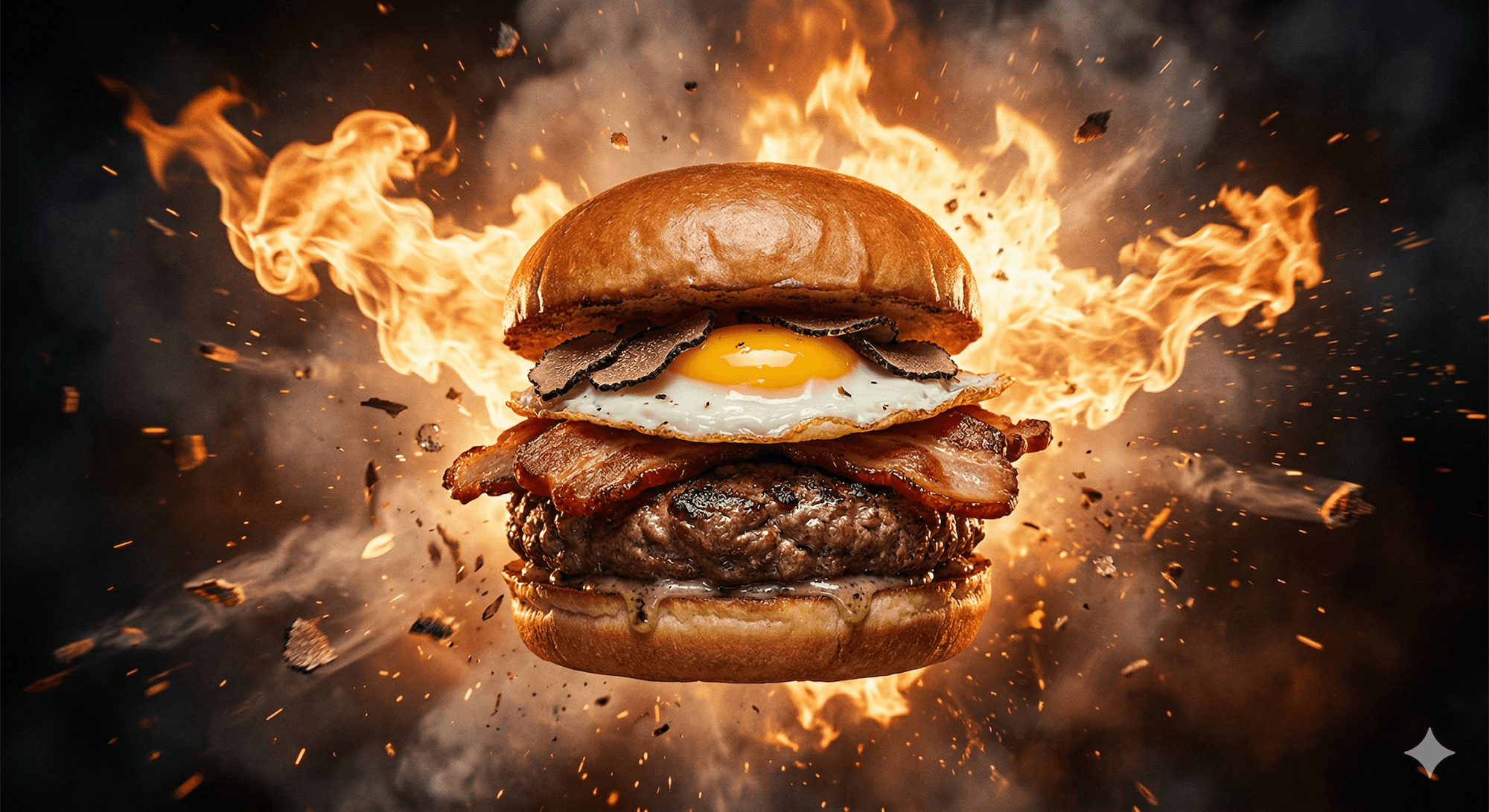
Episode 1: The Hamburger — A Global Story in a Bun
I Have Spoken: The History of the Hamburger, As I Know It
Article 1 of the "I Have Spoken" series
First Things First — Why "I Have Spoken"?
Yes. I am a geek. Not just about food. About all of it — the science, the history, the stories, the lore. Star Wars, comic books, the periodic table of elements, the migration patterns of spice routes. If there's deep knowledge to be found in any corner of the universe, I want it. That's just who I am.
So when Disney+ dropped The Mandalorian in 2019, I was there on day one. And like a lot of people, I fell hard for a character that barely spoke and stole every single scene he was in: Kuiil — an Ugnaught, one of the pig-snouted, stocky humanoid species from the Star Wars universe, small in stature but massive in presence. Nick Nolte voiced him — and that voice, that slow, measured, worn-in-by-the-galaxy delivery, was perfect casting. (The physical performance on set was by Misty Rosas, who brought Kuiil's body language to life under that expressive face.)
Kuiil was a moisture farmer on a remote desert planet — Arvala-7, if you want the coordinates. He had earned his freedom from the Empire through years of hard, grinding labor. He wore patched work clothes. He rode a blurrg. He had no interest in drama, politics, or being anyone's hero. He was practical, he was dignified, and he did not waste words. When Kuiil decided something was true, he said it once, clearly, and then he ended the conversation with four words that I immediately recognized as one of the greatest phrases in the English language:
(And for those of you who haven't seen the show yet — fix that. Kuiil will be back in the upcoming theatrical film The Mandalorian & Grogu, and you'll want to know who he is before you walk into that theater.)
"I have spoken."
Not "I think." Not "in my opinion." Not "you might want to consider." Just — I have spoken. The research is done. The argument is settled. The subject is closed.
I love that line because it doesn't come from arrogance. Kuiil was never arrogant. It comes from certainty earned through experience. He'd done the work. He knew what he knew. And he wasn't going to pretend otherwise out of false modesty.
That's the spirit of this section.
"I Have Spoken — The History of Recipes As I Know It" is exactly what it sounds like: a deep dive into the history of the dishes we cook, love, argue about, and build traditions around. We're going to dig into the origins, the myths, the real stories, the forgotten characters, and the fascinating science behind the food on your table. We're going to be thorough. We're going to be honest about what we don't know as much as what we do. And at the end of every piece, when the research is exhausted and the story is told as completely as I can tell it?
I have spoken.
But here's the thing about Kuiil — even he left the door open. At the end of every conversation, every subject, you could still walk back up to his moisture farm and say "but wait, what about..." and if your argument was good enough, he'd hear it. So at the end of every article in this series, I'll ask: do YOU have something to add? Because the best food history is a conversation, not a lecture.
One more thing before we dive in: I'm a chef, not a historian. And the research that goes into these pieces is deep — deep enough that I don't pretend to do it alone. With the help of several AI research agents for deep historical digging and writing support, I present this. The voice is mine. The curiosity is mine. The opinions are absolutely mine. But the hours of sourced, cross-referenced research that fills these pages? That takes a village — and some of that village runs on large language models. I think that's worth saying out loud.
Now. Let's eat some history.
My Burger Story — Before We Get Into Yours
Before I tell you the history of the hamburger, let me tell you my history with it. Because this section isn't a textbook. It's personal. And if I'm going to ask you to trust that I've earned the right to say "I have spoken" on this subject, you deserve to know where I've been.
I grew up under the watch of my grandmother — my Nana. (You can read her full story here — she deserves her own reading.) From birth to about twelve years old, Nana's kitchen was my world. And in that world, there was exactly one acceptable hamburger: hand-formed, from the grill, on a plain bun or white bread, with ketchup. That was it. Full stop. Nana wasn't what you'd call a burger woman — it wasn't her dish, it wasn't her language. But when a burger did appear, it came off that grill with her hands on it, and it tasted like Saturday.
That simplicity — ground beef, fire, bread, ketchup — is burned into my DNA. It is the baseline against which every burger I've ever eaten since has been measured.
Then I left Nana's kitchen and went to work.
I put in time at Burger King. I worked a small restaurant. I found my way into diners — and if you've never understood the particular magic of a diner burger, I feel sorry for you. The Peter Pan Diner, White Castle with its tiny steamed squares that somehow add up to a full meal, McDonald's — which I didn't just eat at, I worked at, and there is nothing like working a McDonald's line to teach you exactly how much precision goes into what looks like simplicity. And Wendy's, which deserves far more credit than it gets for taking the burger seriously before "serious burger" was a category.
Then came the years in uniform. When you're stationed near a base, you eat what's close, what's fast, and what feels like home. For me, that meant two places above almost everything else: Whataburger and Sonic. Whataburger, for those who've never had the pleasure, is a Texas institution — big, sloppy, unapologetic, made to order at any hour of the day or night. Sonic was the drive-in that reminded you that eating in your car with the windows down is one of the small, genuine pleasures of being alive. Those burgers didn't need to be complicated. They needed to be there, and they were.
Now I'm approaching sixty years on this planet — nearly six decades of burgers — and the list has gotten considerably more interesting.
Shake Shack made me understand what Danny Meyer meant when he said fine dining and a burger weren't actually different conversations. Their ShackBurger — fresh beef, never frozen, cooked to order — is a masterclass in doing simple things with excellence.
Pat LaFrieda Meats changed the conversation entirely for me. Third-generation New York City butchers, operating since 1922, Pat LaFrieda and his team are the people behind the custom blends at some of the best burger restaurants in the country. Their 45-day dry-aged beef program is something else — the aging concentrates the beef flavor in a way that makes you question every non-aged burger you've ever eaten. The fat tastes different. The meat tastes different. The whole thing tastes like someone turned up the volume on beef itself.
And then there's the top of the mountain, the place I've arrived at after nearly sixty years of eating burgers on five continents: a wagyu beef burger, made from steak-grade Kobe-style beef, topped with shaved black truffles and a perfectly fried egg. The yolk runs. The truffle perfumes everything. The wagyu fat melts at a lower temperature than regular beef, which means it coats your mouth differently, lingers differently, finishes differently.
Nana's grill burger with ketchup on white bread. A wagyu-truffle-egg stack that costs more than some people's grocery budgets. I've had both. I love both. They are the same dish and completely different dishes and that is exactly why the hamburger is worth writing about.
Now — let's find out where it actually came from.
Episode 1: The Hamburger
"I have spoken."
— Kuiil, The Mandalorian (Season 1, Episode 1 — "Chapter 1: The Mandalorian," 2019)
Voiced by Nick Nolte
We're starting with the American icon. The one that's been called a symbol of freedom, a symbol of excess, a cause of cultural imperialism, and the greatest sandwich ever assembled by human hands. We're starting with the hamburger.
Buckle up. This one goes back to the steppes of 13th-century Mongolia.
Every great dish comes with a creation myth, and the hamburger has one of the more dramatic ones: Mongol horsemen, riding across the Central Asian steppe under Genghis Khan, supposedly packed raw horse or camel meat beneath their saddles. The friction and body heat of hours in the saddle tenderized the meat, turning it edible without fire.
It's a hell of an origin story. And food historians have been skeptical of it for decades.
The truth: the "meat under the saddle" story is almost certainly apocryphal — a romantic legend that got attached to the burger's origin sometime in the 19th century. No contemporary Mongol account describes this practice. What is true is that the Mongol Empire's expansion across Eurasia in the 13th century created trade corridors that connected East and West in ways the world hadn't seen before. And through those corridors, food traditions traveled — including a tradition of seasoned, minced raw meat we now call Steak Tartare, which had a direct, documented role in what eventually became your hamburger.
As the Mongol cavalry pushed into Russia and Eastern Europe, dietary habits followed. The Russians absorbed and refined the concept of minced, seasoned raw meat — adding raw egg, onion, and salt — and the French eventually coined the term "Steak Tartare," a nod to the Tatar origins of the dish. By the 17th century, raw seasoned beef was a recognized delicacy across Northern and Eastern Europe. The question was: what happened when it crossed into Germany?
The city of Hamburg was one of the great port cities of the world — a trading hub where goods and people from across Europe, Russia, and beyond passed through constantly. Russian sailors brought their raw minced meat tradition through Hamburg's port, and the Germans did what the Germans do: they improved it. By the 17th century, a dish called the Frikadelle was already present in German cooking — a cooked, seasoned patty of minced meat. By the 19th century, Hamburg's butchers had developed what they called the "Hamburg Steak" — a preparation of high-quality regional beef, minced fine, heavily seasoned with salt and local spices, formed into a patty, and cooked. It was considered a cut above peasant food. A Hamburg Steak was the kind of meal a working man could be proud to order.
This matters for one critical reason: Hamburg was the departure point for the great wave of German immigration to America.
During the first half of the 19th century, most European emigrants to the New World boarded ships in Hamburg. The 1848 political revolutions sent hundreds of thousands of Germans fleeing to America — the largest wave of German immigration in history. These people brought their language, their brewing traditions, their sausage-making, and their Hamburg Steak.
The earliest documented appearance of the Hamburg Steak in America is remarkable for where it shows up: Delmonico's Restaurant in New York City, one of the most prestigious dining establishments in the country, listed a "Hamburg Steak" on its menu in 1873, priced at 11 cents. The recipe was developed by their head chef, Charles Ranhofer.
Let that sink in. Before the hamburger was a lunch-cart working man's food, it was on the menu of a fine dining restaurant in Manhattan.
But it didn't stay there. Street carts and working-class restaurants along the New York waterfront quickly adopted it — German immigrants looking for a taste of home, dock workers who needed a filling meal on a budget. The Hamburg Steak was served on a plate with onions and potatoes, eaten with a knife and fork. The crucial transformation — getting rid of the knife and fork, putting it between bread, and handing it to someone who needed to eat it while walking — is where the story gets complicated. And contested. And deeply, wonderfully American.
This is the part food historians love to argue about over their own hamburgers, and rightly so, because nobody actually knows. Here are the five serious contenders.
Charlie Nagreen set up a stall at the Seymour Fair in Wisconsin in 1885 — fifteen years old, selling meatballs, watching people walk away because a meatball is hard to eat while covering ground. His solution: flatten the meatball and put it between two slices of bread. The Seymour Community Historical Society credits Charlie — nicknamed "Hamburger Charlie" — as the inventor.
That same year, brothers Frank and Charles Menches, vendor brothers from Ohio, were working the Erie County Fair in Hamburg, New York. They ran out of pork for their sausage sandwiches mid-fair. In a panic, they substituted beef — and, according to legend, seasoned it with coffee and brown sugar to approximate the flavor profile customers expected. They named the sandwich after the town they were in. Frank Menches' New York Times obituary later placed the event at the 1892 Summit County Fair in Akron, Ohio instead, which either means the family memory drifted, or there were two origin moments.
Then there's the claimant that catches people off guard: Oscar Weber Bilby, and this one has a strong case. On July 4th, 1891, Bilby hosted a Fourth of July celebration at his ranch near Sapulpa, Oklahoma, grilled beef patties on a self-constructed grill, and his wife Fanny baked the buns. For what may be the first documented time in history, a cooked ground beef patty was placed between a proper baked yeast roll — not toast, not flat bread, but a soft, purpose-built bun. In 1995, Oklahoma Governor Frank Keating officially proclaimed Tulsa "the Real Birthplace of the Hamburger." The original Bilby grill still cooks burgers today at Weber's Root Beer Stand in Tulsa's Brookside neighborhood, a family business that opened in 1933. If you believe the bun is the defining feature of a true hamburger, Oscar Weber Bilby may be your man.
Texas historian Frank X. Tolbert credits Fletcher "Old Dave" Davis, who ran a small café in Athens, Texas in the late 1880s, serving ground beef patties with mustard between thick slices of Texas toast — a preparation popular enough that he reportedly brought it to the 1904 St. Louis World's Fair, where the New York Tribune noted it as one of the Fair's food innovations.
And then there's Louis Lassen, a Danish immigrant who opened Louis' Lunch in New Haven, Connecticut in 1895. Around 1900, a customer rushed in and asked for something quick to eat on the go. Lassen took ground beef trimmings, broiled them in a cast-iron stove, and served them between two slices of white toast. The U.S. Library of Congress' American Folklife Center credits Louis' Lunch as the maker of America's first hamburger sandwich. Louis' Lunch is still open today — still cooking on the same 1898 broiler, still serving on toast, still refusing to put ketchup on the table. New York Magazine food editor Joshua Ozersky once argued that toast disqualifies it as a real hamburger. The people of New Haven have not dignified that argument with a response.
No court has ruled. No document has settled it. What is settled is this: by the time of the 1904 St. Louis World's Fair, the hamburger sandwich was real, it was being sold, and it was about to change America.
The Louisiana Purchase Exposition of 1904 introduced 20 million American visitors to the hamburger sandwich, the hot dog, the ice cream cone, and iced tea — essentially staging a preview of 20th-century American food culture in a single summer. The New York Tribune called the hamburger "the innovation of a food vendor on the Pike." Fletcher Davis reportedly had a booth. So did others. It didn't matter who invented it anymore. The nation had tasted it, and the nation approved.
For the next decade and a half, though, the hamburger's reputation was precarious. In 1906, Upton Sinclair published The Jungle — his brutal exposé of the Chicago meatpacking industry. Sinclair intended it as a socialist critique of labor conditions. What Americans actually reacted to was the description of what went into their ground beef. Sales of meat products dropped dramatically across America. The hamburger, with its ground beef of uncertain origin sold by carts of uncertain hygiene, became associated with danger and deception.
Enter Walter Anderson and Edgar Waldo "Billy" Ingram.
On March 10, 1921, they opened the first White Castle in Wichita, Kansas. The name was deliberate. The architecture was deliberate. The gleaming white tile walls were deliberate. White = purity. Castle = permanence. They ground their beef in front of customers. They designed their kitchens to be fully visible. They dressed their employees in spotless white uniforms. White Castle became the world's first fast food hamburger chain. Their small, square, steam-cooked sliders sold for five cents. By 1934, they had expanded to 16 cities. They hit one billion burgers sold in 1961 — two years before McDonald's hit that milestone. Time magazine named the White Castle slider "The Most Influential Burger of All Time" in 2014.
White Castle saved the hamburger's reputation. The rest of America built an empire on it.
Richard "Dick" and Maurice "Mac" McDonald were brothers from New Hampshire who moved to California chasing the movie industry, worked as stagehands, and eventually decided to start their own business. In 1940, they opened McDonald's Bar-B-Que Restaurant in San Bernardino — a drive-in with 25 menu items, carhops, and all the trappings of the California roadside restaurant. Then, in 1948, they did something almost insane: they closed for three months, gutted the operation, and reopened with a menu of nine items and a system they called the Speedee Service System.
Every station in the kitchen was designed for a single purpose. Every burger was assembled in the same order, the same way, the same time. Prices were slashed. Customers came to a counter. No plates, no silverware, no waitresses. The brothers had invented the modern fast food kitchen. Their 15-cent hamburger was turning out in under a minute.
A milkshake machine salesman named Ray Kroc drove out from Chicago in 1954 to meet the brothers who had ordered eight of his Multimixer machines. He stood in the parking lot, watched the operation, and reportedly said to himself: "This is the most beautiful sight I've ever seen." Kroc became the brothers' franchise agent, opened his first franchise in Des Plaines, Illinois in 1955, and eventually bought the brothers out entirely in 1961 for $2.7 million. That figure, by any accounting of what McDonald's became, is one of the most consequential and perhaps most regretted sales in business history. Mac McDonald died in 1971. Dick McDonald moved back to New Hampshire and lived until 1998, reportedly never truly at peace with what he'd sold.
By the 1970s, McDonald's had a stranglehold on American fast food. But two challengers had risen with a point to make. Burger King, founded in 1953, went after McDonald's standardization by claiming they flame-broiled their burgers rather than grilling them, and offered something McDonald's couldn't: "Have It Your Way" (1974). The idea that a customer could customize their order was genuinely revolutionary in an industry built on production-line uniformity.
Then came Wendy's — founded in 1969 by Dave Thomas in Columbus, Ohio — with its square patties and fresh (never frozen, they claimed) beef.
The Burger Wars officially ignited in 1982 when Burger King launched a direct advertising campaign openly comparing their Whopper to the Big Mac. Then Wendy's entered in 1984 with what may be the most famous fast food commercial ever made: the "Where's the Beef?" campaign, featuring 81-year-old Clara Peller peering under a tiny patty on a giant bun and rasping that immortal question. "Where's the beef?" entered the American lexicon almost immediately, used by everyone from late-night comedians to presidential candidate Walter Mondale, who deployed it against Gary Hart in the 1984 Democratic primary debates. By 1985, the major chains had collectively spent over $318 million on television advertising in a single year — just to sell hamburgers.
While the chains were fighting their wars, regional burger traditions were quietly developing some of the most interesting burgers ever made.
In 1922, a restaurant owner in El Reno, Oklahoma was trying to feed striking railroad workers during the Great Railroad Strike — and he was running low on beef. His solution: take a ball of beef, press it flat onto a griddle, and immediately smash a massive pile of thinly sliced onions into it before it sets. The onions cook into the patty, become almost caramelized and lacy, and double the volume of the sandwich for a fraction of the cost. This is not just a topping trick. It's Depression-era resourcefulness elevated to technique. The Oklahoma onion burger is arguably the original smash burger, decades before "smash burger" became a trend. El Reno holds an annual Fried Onion Burger Day festival. The burger is serious business in central Oklahoma.
Two Minneapolis bars — Matt's Bar & Grill and the 5-8 Club — have been fighting over the Jucy Lucy since approximately forever. Both claim to have pioneered it in the early 1950s; Matt's Bar gives the precise date of 1954. The concept is deceptively simple and physically dangerous if you're impatient: cheese is sealed inside the raw patty before cooking. When it hits heat, the cheese melts into a molten pocket of dairy lava. Every first-time Jucy Lucy eater has the same experience: they take an impatient bite and immediately burn the roof of their mouth. Matt's Bar reportedly has a warning sign on the menu. The sign does not prevent injuries.
Connecticut doesn't just have a claim to the first hamburger sandwich — it also invented arguably the most unusual regional preparation in the country. The steamed cheeseburger traces back to Jack's Lunch in Middletown in the 1930s. Beef patties are steamed in special metal boxes. The cheese is steamed separately. Everything is moist and tender in a way that grilled burgers never are. It never spread beyond central Connecticut, which might be why it remains so pure.
New Mexico takes the green chile cheeseburger seriously enough that it's the state's de facto official food. Hatch green chiles — roasted, smoky, with a heat that ranges from mild to incendiary — are piled on a beef patty with American or pepper jack cheese. The Owl Bar & Café in San Antonio, New Mexico, population 150, has been making what many consider the definitive version since 1945 and regularly draws pilgrims from hundreds of miles away.
And then there's the Slugburger — born of necessity in Corinth, Mississippi around 1917 and shaped entirely by Depression-era economics. A patty of beef mixed with grain filler, stretched to feed more people for less money, deep fried rather than grilled. In Corinth they still celebrate it with an annual Slugburger Festival. The name comes from "slug" — Depression-era slang for the nickel it cost to buy one.
This is the part most burger histories skip. They shouldn't.
When you press a beef patty onto a hot cast iron or griddle, you're triggering a cascade of chemistry that food scientists have spent decades trying to fully map. The short version: the Maillard reaction is responsible for approximately 90% of what you taste in a well-seared burger.
Named for French chemist Louis-Camille Maillard, who described it in 1912, the Maillard reaction occurs when amino acids in the beef proteins react with reducing sugars under heat — producing hundreds of distinct flavor compounds simultaneously. This is what creates the brown crust, the savory depth, the complex char. It's not burning. It's transformation.
For the Maillard reaction to work properly, you need fat content — the magic number is 80/20, 80% lean beef, 20% fat. The fat carries fat-soluble flavor compounds and distributes heat evenly. Go leaner and the burger dries out. Go fattier and you lose structural integrity. You need surface contact — the more surface area in direct contact with the heat, the more Maillard reaction occurs. This is the entire scientific argument for the smash burger: smashing the patty flat dramatically increases surface contact and produces a more developed crust in less time. And you need the right temperature — the Maillard reaction requires temperatures above 280°F. Water boils at 212°F, and until it evaporates, it keeps the surface temperature below that threshold. This is why a cold, wet patty on a too-cool pan steams instead of sears.
A coarser grind retains more texture and moisture. A finer grind produces denser, more uniform patties. Neither is wrong. They're different tools for different burgers.
Here's where I put my cards on the table.
A great burger — a life-changing burger — is cooked medium rare. Not medium. Not "just a little pink." Medium rare: a warm, rosy, yielding center with enough residual heat to be safe and enough retained moisture to remind you that beef is a magnificent thing. That's the target.
The problem is that heat doesn't take instructions. When you put a patty on a grill or a cast iron pan, that single source of heat is being asked to do two completely different jobs: develop the Maillard crust on the outside and bring the interior to the precise temperature you want. Those two jobs are in direct conflict. By the time the outside has the crust you want, the inside has often been pushed past where you wanted it. And an overcooked Maillard reaction — one that's gone too far — tips from transformation into bitterness.
The solution is to stop asking heat to do two jobs at once.
Step one: sous vide for doneness. Seal the patty and cook it in a precisely temperature-controlled water bath — set to 130°F for medium rare. The patty reaches exactly that temperature and holds it, edge to edge, all the way through. No guessing. No cutting it open to check.
Step two: high heat for the crust. Pull the patty from the sous vide, pat it completely dry — surface moisture is the enemy of the Maillard reaction — and hit it hard and fast. A screaming-hot cast iron pan. A grill at maximum temperature. A salamander (an overhead high-heat broiler that delivers intense, direct radiant heat from above — a tool more home cooks should know about). You're not cooking the burger at this point. You're finishing it. Sixty to ninety seconds per side, no more.
The result: medium rare, precise, with a crust that's deeply developed because you never had to choose between the two.
Salt both sides of the patty. Not just a pinch — season it with intention. Salt does two things: it builds flavor from the inside out, and it draws surface moisture out of the patty, which you then pat completely dry before it hits the heat. That dry surface is what allows the Maillard reaction to ignite instantly rather than steaming in its own moisture for the first thirty seconds.
Salted on both sides. Finish with black pepper. Medium rare. Cooked to 128–132°F.
And the black pepper goes on at the finish — not before. Black pepper contains volatile aromatic compounds that are magnificent when fresh and acrid when burned. If you season with pepper before the high-heat sear, those compounds scorch and turn bitter before the crust has even developed. Add the pepper after the patty comes off the heat, while it's resting. The residual warmth blooms the pepper's aromatics without destroying them.
A burger cooked right can change your life. I believe that sincerely. And this is how I cook one.
For most of the 20th century, the cultural understanding of the hamburger was binary: fast food or a backyard grill staple. The idea of paying serious money for a serious burger in a serious restaurant simply didn't exist as a category.
That changed in 2001, when Danny Meyer — the man behind Union Square Cafe and Gramercy Tavern — set up a hot dog cart in Madison Square Park as part of an effort to revitalize the neighborhood. In 2004, the city granted a permit for a permanent kiosk. Meyer expanded the menu, added burgers, shakes, and fries, and named it Shake Shack.
The lines started immediately. The ShackBurger — fresh beef, never frozen, cooked to order — wasn't fast food. It was restaurant food at fast-food prices. It borrowed the vocabulary of fine dining and applied it to a 15-minute lunch. A category was born. Better burger restaurants proliferated across the country: Five Guys, Smashburger, In-N-Out (which had been doing this quietly in California since 1948). Chefs who had never put a burger on their tasting menu suddenly did. April Bloomfield's Breslin Burger — lamb fat rubbed, bone marrow glazed, on a griddled English muffin — became a pilgrimage destination. Umami Burger built an entire concept around the fifth taste, stacking their patties with ingredients engineered for glutamate intensity.
The burger had gone from street food to fine dining and back again, simultaneously.
Here is perhaps the strangest chapter in the hamburger's history: the dish that started as an immigrant's food, brought from Hamburg to New York, eventually got exported back to the entire world by American fast food chains — and became the most recognizable food symbol on Earth.
Japan was one of the first nations to adapt it on its own terms. McDonald's Japan opened in 1971, and the Teriyaki Burger became a local staple. Japan also developed MOS Burger (founded 1972) offering the rice burger — patty held between two compressed rice cakes instead of a bun.
India presents a fascinating case study in adaptation. With a large Hindu population for whom beef is religiously prohibited and a large Muslim population for whom pork is prohibited, McDonald's India's entire business model had to be rebuilt from scratch. The result: McAloo Tikki — a spiced potato-and-pea patty — and the Maharaja Mac, made with chicken instead of beef. Approximately 70% of McDonald's India's menu is unique to the region. The American hamburger, in India, contains no beef at all.
Germany received the American hamburger — their own cultural descendant — as a foreign import. German craft burger culture today rivals any in the world, though the country takes a quiet pride in noting that they had the Hamburg steak long before anyone put it on a bun.
Australia added beetroot — from a can — to their standard "burger with the lot" (egg, bacon, beetroot, pineapple, tomato, lettuce, cheese, beef patty), creating a construction that most American visitors find either brilliant or horrifying, usually depending on how hungry they are.
The burger, which traveled from Eurasia to Hamburg to New York, has now circled the entire globe and come home wearing different clothes in every country. It is the most localized global food in existence.
The 21st century's most significant chapter in hamburger history isn't a new restaurant chain. It's a question: can you make a hamburger without killing anything?
Beyond Meat, founded in 2009, focused on plant-based protein structures that could approximate the texture of beef. Impossible Foods, founded by Stanford biochemist Pat Brown in 2011, asked a more specific question: what makes beef taste like beef, and can we produce it without a cow? Their answer was heme — the iron-rich molecule in beef that produces the distinctive bloody, savory flavor of meat. Impossible Foods found a way to produce soy leghemoglobin through fermentation. When you bite an Impossible Burger, the "bleeding" you see isn't blood — it's engineered heme.
The Impossible Burger debuted publicly in July 2016 at David Chang's Momofuku restaurant in Manhattan. The Impossible Whopper launched at Burger King in 2019. Lines formed. Demand so severely exceeded production that Impossible Foods' scientists were reportedly volunteering to work 12-hour shifts on the production line to triple output.
Whether plant-based burgers represent a permanent shift or a trend that peaked and receded remains genuinely debated. Sales peaked around 2020-2021 and have since softened. But no serious discussion of the hamburger's history can ignore them: they represent the first genuine challenge to the beef patty's monopoly on the burger concept in the dish's 150-year American history.
From Mongolian steppes to the port of Hamburg, from Hamburg to the deck of an immigrant ship, from New York's waterfront carts to Delmonico's fine dining menu, from five claimants arguing over a bun to 20 million people tasting it at the 1904 World's Fair, from White Castle's gleaming tiles to the Speedee Service System to the Burger Wars to the Jucy Lucy to the smash burger revolution to the Impossible Whopper...
The hamburger is not a simple dish. It never was. It is the most American of foods precisely because it belongs to everyone and no one, because it started as an immigrant adaptation and became a global export, because it can cost a dollar fifty or forty-five dollars, because it can be made of beef or potato or soy or lamb or black beans, because every region of this country has its own version and every version has its passionate defenders.
The hamburger is a melting pot in a bun. It has always been.
And with that — on the history of the hamburger, as I know it...
I have spoken.
Now — do YOU have something to add? A regional burger I missed? A family tradition? A claim you want to defend? The floor is yours. I'm listening.
— Jerome, bfamcooking
Research Notes & Sources
For those who want to dig even deeper, the key sources behind this research:
- History of the Hamburger — Wikipedia
- History of the Hamburger in the United States — Wikipedia
- Hamburg Steak — Wikipedia
- Louis' Lunch — Connecticut History
- Was the Hamburger Invented in Tulsa? — Route 66 News
- Fried Onion Burger — Wikipedia
- Jucy Lucy — Wikipedia
- White Castle History — KCUR
- History of McDonald's — Wikipedia
- How Hamburgers Became an Iconic American Food — HISTORY
- The Burger Wars — Burger Beast
- Shake Shack — Wikipedia
- The Maillard Reaction in Burgers — Schweid & Sons
- Impossible Foods — Wikipedia
- A Brief History of Impossible Foods — Business of Business
- Regional Burger Styles — Inside Hook
jerome amos
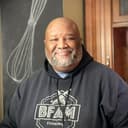
Jerome Amos is a native New Yorker, foodie, and chef who learned to cook as a young child. His older relatives, boy scout training, and desire to help prep the Sunday church potluck meals profoundly influenced Jerome's early love of preparing and sharing delicious recipes and creating a connected community.
Jerome of BFAM Cooking By the age of 10, Jerome was making his meals and operating the grill at family BBQs. He continued to learn and expand his culinary experience by trying new techniques and observing his grandmother preparing her family recipes. Jerome began working in restaurants in high school, moving his way up from dishwasher to kitchen prep. Jerome got married, joined the military, and didn't level up his cooking until a few years after the USAF when he and his wife watched The Food Network. Their shared passion for cooking led them to take cooking classes and attend significant food events where celebrity chefs would appear and do cooking demos.
Understanding basic cooking techniques paired with the curiosity of making an idea work inspired Jerome and his wife to attend as many food events and cooking adventures as possible. This exploration has taken them worldwide, including Italy, where they learned about their surroundings through the local ingredients, recipes, and traditions. A turning point for Jerome took place in a Costco when he was doing his weekly grocery shopping and noticed a couple who was purchasing almost a dozen containers of BBQ sauce. Jerome had just taken a BBQ class and knew this guy had to be cooking up to something delicious.
After a brief conversation, Jerome and his wife were invited to this couple's BBQ, and a foodie friendship was born. Jerome and his new friend, Ellis, couldn't get enough chow chat, discussing everything from Southern flavor and French dishes to favorite chef knives and preferred salt. Together, they felt they had a lot to share with many other food lovers out there and B.F.A.M. Cooking (Brothers from Another Mother) was born on YouTube. Jerome, who had served in the US. Air Force for over five years, during the gulf war, said that the military way is to treat everyone on your team the same as your family.
That became the foundation for Brothers From Another Mother cooking or BFAM Cooking because everyone can be your "fam", especially at the dining table. The BFAM Cooking videos range from delicious, original recipes Jerome created to American restaurant owners who wanted to know better. There are also videos about cooking tools that he loves and simple techniques to make things easier. Jerome was recently one of the many chefs from around the globe who competed in an exclusive online competition to be named the world's Favorite Chef, receive $50,000, and a feature in two-page advertising spread in Bon Appétit announcing the winner. Voted on by the fans, Jerome made it as a semi-finalist, placing 3rd in his group.