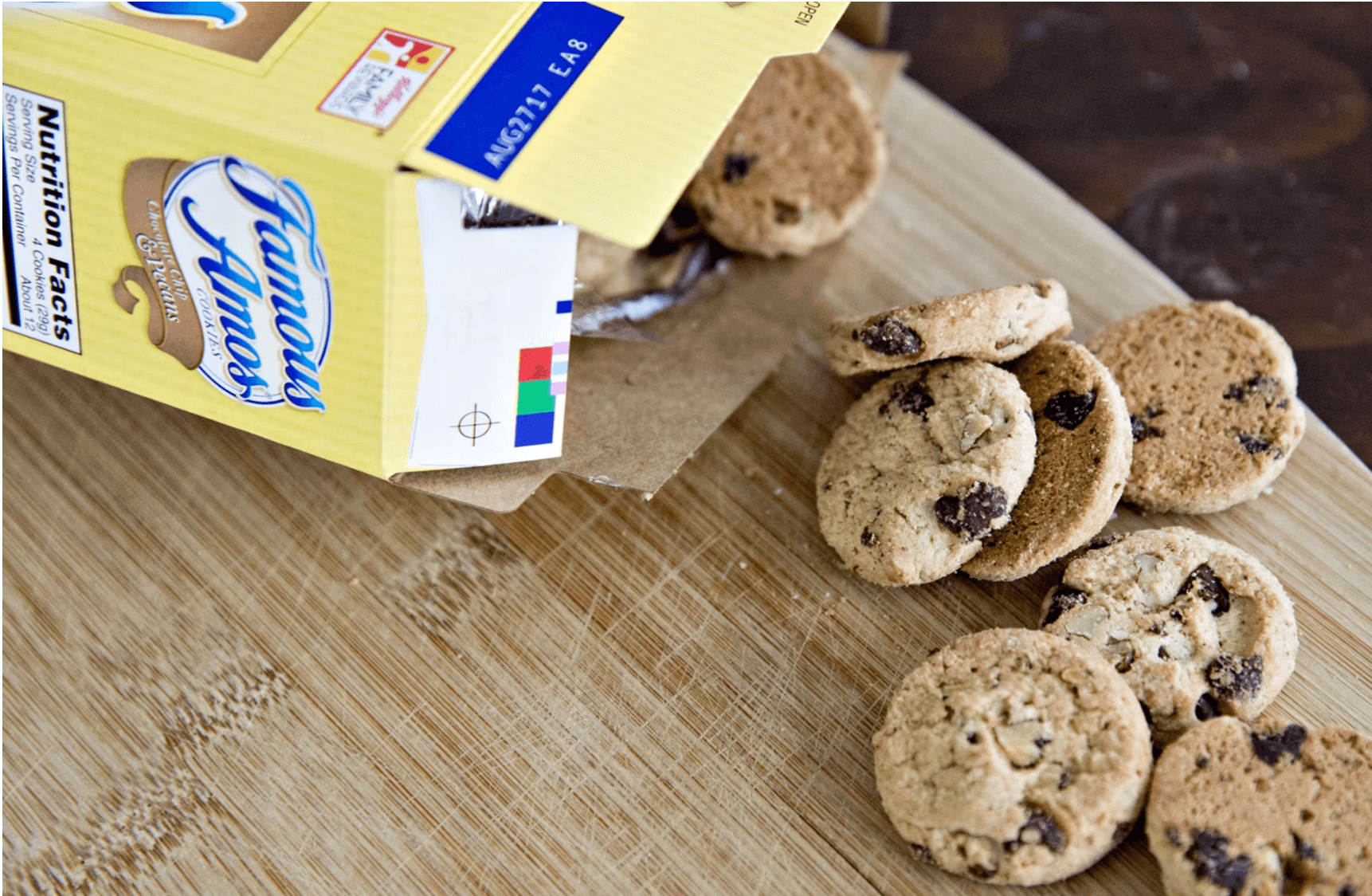
Cookie Man
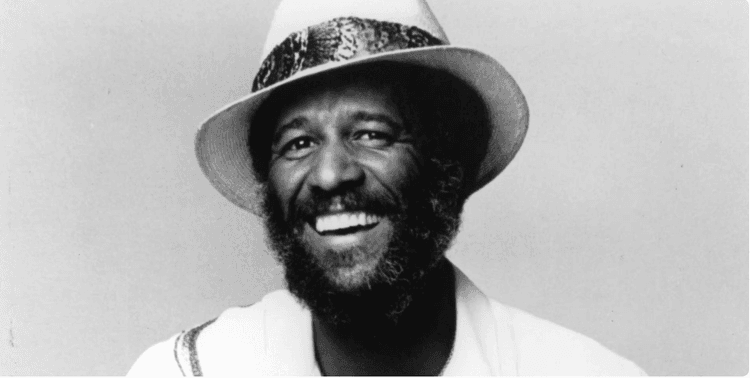
July 1, 1936 – August 13, 2024
Long before Famous Amos cookies became a household name, before the iconic packaging graced supermarket shelves across America, there was a young boy in Tallahassee, Florida, watching his Aunt Della work magic in the kitchen. Wallace 'Wally' Amos Jr. didn't know it then, but those warm chocolate chip cookies—baked with love during difficult times—would one day inspire him to revolutionize the cookie industry and become one of America's most celebrated Black entrepreneurs.
Born on July 1, 1936, to Wallace Sr. and Ruby Amos, young Wally grew up in Tallahassee, Florida, in a working-class family that knew the sting of economic hardship. Money was scarce enough that he often walked four miles to and from school just to save the bus fare. When his parents divorced in 1948, 12-year-old Wally was sent north to New York City's Harlem to live with his Aunt Della Bryant—a woman whose influence would prove transformative.
Aunt Della was more than a guardian; she became a surrogate mother who expressed her love through the kitchen. Her specialty was chocolate chip cookies, and she baked them frequently for Wally and his sister. These weren't just treats—they were acts of affection, symbols of stability in an uncertain world. Decades later, Amos would reflect on these moments as the foundation of what he called his "love affair with the chocolate chip cookie."
Inspired by Aunt Della's culinary skill, Amos enrolled at the Food Trades Vocational High School in Manhattan, determined to pursue a career in the culinary arts. He secured an apprenticeship at the prestigious Essex House hotel on the edge of Central Park, immersing himself in professional cooking. But this period also exposed him to the harsh realities of racial discrimination in 1950s America. Time and again, he watched white students receive promotions he'd earned, their advancement coming not from superior skill but from the color of their skin.
Frustrated by the discrimination and recognizing that the culinary industry's doors weren't fully open to him, Amos made a life-changing decision in 1953. Just months before he would have graduated from high school, he dropped out and enlisted in the United States Air Force. He was 17 years old.
From 1954 to 1957, Airman 2nd Class Wallace Amos served at Hickam Air Force Base in Honolulu, Hawaii, working as a radio and radar technician. The military proved to be the structured environment he needed. Years later, in a 2007 interview with the 1st Combat Camera Squadron during a return visit to Hickam, Amos reflected on the profound impact his service had:
"I grew up in the Air Force. I learned to be responsible, I learned to take care of me, I learned what it meant to make a commitment to someone and to honor that commitment, so I will always have a soft spot in my heart for the Air Force."
The Air Force gave Amos more than discipline and technical skills—it gave him his education. During his service, he earned his General Education Development (G.E.D.) diploma, the high school equivalency credential that would unlock doors previously closed to him. He was honorably discharged in 1957, carrying with him the values of responsibility, commitment, and service that would define his entrepreneurial journey.
Returning to New York after his discharge, Amos learned secretarial skills and joined the William Morris Agency—one of Hollywood's most powerful talent agencies—as a mailroom clerk. It was an entry-level position, but Amos had learned in the Air Force not to see any honest work as beneath him. He had also learned that commitment and excellence could transcend barriers.
Within a year, Amos's charisma, work ethic, and natural ability to connect with people earned him a promotion that made history: he became William Morris Agency's first Black talent agent. The significance of this achievement in 1960s America cannot be overstated. In an industry dominated by white executives, Amos wasn't just opening doors for himself—he was blazing a trail for countless others.
As head of the agency's rock 'n' roll department, Amos worked with some of the biggest names in music. He signed the folk duo Simon & Garfunkel, launching their career. He represented Motown legends including The Supremes, Diana Ross, Marvin Gaye, The Temptations, Sam Cooke, and Dionne Warwick. His client roster read like a who's who of 1960s popular music.
But Amos brought something unique to the business: cookies. Drawing on Aunt Della's recipe, he began baking chocolate chip cookies and sending them to prospective clients along with invitations to meet with him. The cookies became his calling card, a warm personal touch in the often cutthroat entertainment business. Clients loved them. Colleagues requested them. The cookies that had once symbolized love in his aunt's Harlem kitchen were now opening doors in Hollywood.
Yet success in the agency world didn't shield Amos from the racism that had followed him from the Essex House kitchens. Once again, he found himself passed over for promotions in favor of white colleagues with less experience. In 1972, seeking greater autonomy, he moved to Los Angeles to establish his own talent management agency. But the venture struggled. The stress mounted. And in those difficult nights, Amos found himself returning to what had always brought him comfort: baking chocolate chip cookies.
Friends and colleagues had been telling Amos for years that his cookies were good enough to sell. In 1975, with his management agency floundering, he decided to listen. Two of his former clients—singers Marvin Gaye and Helen Reddy—believed in him enough to provide $25,000 in startup capital. On March 10, 1975, Wally Amos opened the first Famous Amos cookie store at 7181 Sunset Boulevard in Hollywood.
The location seemed unlikely for success. The east side of Sunset Boulevard was seedy, with strip clubs and prostitution. The store was across the street from adult entertainment venues. They were held up multiple times. But Amos, drawing on lessons learned in the Air Force about seeing potential where others saw obstacles, believed the location had promise. A few blocks down was the A&M Records loft, where he'd had offices next to music producer Quincy Jones. He knew the entertainment industry crowd would find him.
And find him they did. The grand opening was a star-studded event attended by 1,500 people from the entertainment world. But the real star was Wally himself—or rather, "Famous Amos," the persona he created. Wearing his signature Panama straw hat and colorful embroidered cotton shirt, Amos became the face of the brand. He marketed himself and his cookies the way he'd once marketed musical talent, understanding that personality and authenticity could sell products just as effectively as they sold artists.
The cookies themselves were revolutionary for their time. In an era of mass production and preservative-laden snacks, Amos insisted on quality ingredients and a homemade taste. He sold them fresh-baked, by the pound, in three varieties: chocolate chip with peanut butter, chocolate chip with pecans, and butterscotch chip with pecans. The concept of premium, artisanal cookies was uncommon in 1975 America—Amos was pioneering what would eventually become the gourmet cookie industry.
The numbers told a story of meteoric success. In its first year, the Famous Amos Cookie Company sold $300,000 worth of cookies. By the second year, revenue exceeded $1 million. By 1982, the company was generating $12 million annually. Amos had tapped into something profound: Americans' nostalgia for homemade cookies and their willingness to pay premium prices for quality.
His distribution strategy was as innovative as his product. Rather than immediately flooding supermarkets, Amos positioned Famous Amos as an upscale brand, securing shelf space in Macy's and Bloomingdale's. The cookies that had started on Sunset Boulevard were now being sold in America's most prestigious department stores. Later, they would expand to grocery stores nationwide, making the distinctive packaging—featuring Amos's smiling face in that Panama hat—a familiar sight to millions of Americans.
Amos's fame grew alongside his business. He made cameo appearances on hit television shows including "Taxi," "The Jeffersons," and later "The Office," usually playing himself. The man who had once represented celebrities had become one himself. His face and story embodied the American Dream: a high school dropout and Air Force veteran who'd built a multimillion-dollar business from a family recipe and determination.
In 1986, President Ronald Reagan honored Amos with the Presidential Award for Entrepreneurial Excellence. The following year, he received the prestigious Horatio Alger Award, given to Americans who overcome adversity to achieve success. His signature hat and shirt were even placed in the Smithsonian National Museum of American History. Wally Amos had become an icon.
But success in business, like success in life, is never guaranteed to last. By the mid-1980s, the Famous Amos Cookie Company faced financial difficulties. Larger corporations had entered the premium cookie market, competition intensified, and operational challenges mounted. Amos, whose genius lay in marketing and inspiration rather than financial management, struggled to navigate these corporate waters.
In 1985, Amos sold a controlling stake in his company. Three years later, facing continued financial pressure, he sold the remaining shares. The company changed hands twice more in rapid succession, with new owners focused on maximizing profit rather than maintaining Amos's artisanal vision. They added shelf-stable ingredients and preservatives. They repositioned the brand as an affordable commodity rather than a premium product. The cookies that bore Wally Amos's face were no longer made according to his standards.
In 1992, President Baking Company purchased Famous Amos for $61 million—more than 55 times what Amos had received for his controlling stake just a few years earlier. The irony was cruel: the company he'd built from nothing had become immensely valuable, but the wealth went to corporate buyers, not to the creator.
Adding insult to injury, Amos discovered he could no longer use his own name for business purposes. When he launched Wally Amos Presents hazelnut cookies in 1992, the new owners of Famous Amos sued him for trademark infringement. The courts agreed: by selling his company, Amos had sold not just the business but the commercial rights to his own name and likeness. He was legally forbidden from being "Wally Amos" in the cookie business.
Years later, Amos would reflect on this painful period with characteristic candor: "I was stupid, plain and simple. I sold the company and didn't realize I had sold my future along with it." It was a devastating lesson in the legal and financial complexities of modern business, one that countless other entrepreneurs have learned the hard way.
A lesser person might have been broken by such setbacks. But Wally Amos had survived poverty, discrimination, and military discipline. He had learned in the Air Force that commitment and perseverance could overcome obstacles. He chose to view his losses not as endings but as opportunities for new beginnings.
Unable to use his own name, Amos rebranded his new cookie venture as "Uncle Noname's Cookie Company"—a playful acknowledgment of his legal predicament. In 1994, he partnered with businessman Lou Avignone to launch Uncle Noname Gourmet Muffins, later renamed Uncle Wally's Muffin Company. The focus shifted from cookies to fat-free, nutritious muffins, and the products were eventually sold in more than 3,500 stores nationwide. Though the muffin company filed for bankruptcy in 1996, it demonstrated Amos's refusal to surrender.
In 1999, Keebler—which had acquired the Famous Amos brand—offered Amos a deal to return as a spokesperson. He agreed, but only on one condition: they had to bring the recipe closer to his original formulation. For Amos, authenticity mattered more than money. The partnership eventually ended, but it represented a kind of reconciliation with the brand he'd created.
Having relocated to Hawaii in 1977, Amos found himself drawn back to his Air Force roots. Hawaii had been the site of his military service at Hickam Air Force Base, and now it became the home of his latest venture. In 2014, at age 78, Amos launched The Cookie Kahuna, a new cookie brand that incorporated Hawaiian ingredients and was sold initially in local markets. Fortune magazine celebrated "the cookie comeback of 'Famous' Wally Amos," recognizing that his entrepreneurial spirit remained undimmed.
Even in his eighties, Amos continued innovating. He pitched The Cookie Kahuna on the television show "Shark Tank," demonstrating that age hadn't diminished his charisma or his belief in his product. He launched Aunt Della's Cookies, a tribute to the woman who had started it all. Each venture carried forward the legacy of those chocolate chip cookies baked with love in a Harlem kitchen decades earlier.
Throughout his life, Amos understood that his greatest contribution might not be the cookies that bore his name, but the example he set and the causes he championed. As a high school dropout who earned his G.E.D. in the Air Force, education held deep personal significance.
In 1979, Amos became the national spokesman for Literacy Volunteers of America, a position he held until 2002. He promoted the cause with the same passion and marketing savvy he'd applied to his cookies. "I was the first national celebrity spokesperson to really take the message to the people," he explained. "I did it in very much the same manner as I promoted my cookies." He hosted the adult reading program "Learn to Read" on public television, helping countless adults overcome the shame and limitations of illiteracy.
In 2005, Amos and his wife Christine founded the Chip & Cookie Read Aloud Foundation, a publicly supported organization that promoted reading aloud to children. The foundation's mascots—Chip and Cookie, characters fashioned as boy and girl chocolate chip cookies—made literacy education fun and accessible. Amos understood that changing lives often started with changing how children viewed learning.
He also served on the board of Cities in Schools, Inc., an organization dedicated to keeping at-risk students in school. His involvement reflected his own journey: he knew the challenges of being a disadvantaged youth, the temptation to give up, and the transformative power of second chances. The Air Force had given him such a chance. Now he worked to create similar opportunities for others.
His connection to the Air Force remained strong throughout his life. In 2007, he returned to Hickam Air Force Base as part of Air Force Week Honolulu, reading to children at the base's Child Development Center. The photographs from that day show an elderly Amos, still wearing variations of his signature style, surrounded by children who couldn't have known they were in the presence of a living legend. For Amos, it was simply a chance to give back to the institution that had shaped him.
Amos was a prolific author, writing 11 books and contributing to four others, plus producing two audiobooks. His works blended autobiography, business advice, and motivational philosophy, offering readers the benefit of his hard-won wisdom.
His titles reflected his journey and values: "The Famous Amos Story: The Face That Launched a Thousand Chips" (1983), "The Man with No Name: Turn Lemons Into Lemonade" (1994), "The Cookie Never Crumbles: Inspirational Recipes for Everyday Living" (2002), "Watermelon Magic: Seeds of Wisdom, Slices of Life" (2008), and "The Power in You: Ten Secret Ingredients to Inner Strength." Each book offered readers not just Amos's story but practical guidance for overcoming adversity and achieving success.
His writing emphasized positive thinking, perseverance, and the importance of maintaining dignity and optimism regardless of circumstances. In "Be Positive! Insights On How To Live An Inspiring And Joy Filled Life," he distilled decades of experience into accessible wisdom. These weren't just business books—they were life manuals written by someone who had experienced both tremendous success and devastating failure, and who had learned from both.
Wally Amos's relationship with fame was complex. In a 2014 interview with Honolulu Magazine, he reflected: "Being famous is highly—very, very, very highly—overrated. It doesn't mean you're a nice person. It just means your image has been shown enough times. Hitler was famous. Big deal."
But as the article noted, Famous Amos actually was a nice person. His true legacy extends far beyond the cookies that still bear his name (though no longer his recipe or his control). Amos broke racial barriers in the entertainment industry, pioneered the gourmet cookie market, demonstrated the power of personal branding, championed literacy and education, and showed millions that failure need not be final.
His impact on the food industry was substantial. Before Famous Amos, premium cookies didn't exist as a commercial category. Amos created a market that would later support countless cookie companies, from Mrs. Fields to Tiff's Treats. He proved that Americans would pay premium prices for quality ingredients and artisanal production—a lesson that would later transform not just the cookie industry but the entire food landscape.
For Black entrepreneurs, Amos was a trailblazer who demonstrated what was possible. He had been the first Black talent agent at William Morris. He became one of the most visible Black business owners in America. His face on those cookie packages represented more than a marketing strategy—it was a statement that Black excellence belonged everywhere, including on supermarket shelves in every American home.
In 2020, Content Media Group released the documentary "The Great Cookie Comeback: reBaking Wally Amos," directed by Jeff MacIntyre. The film chronicled not just his business ventures but his philosophy of life, his unwavering optimism, and his belief in the power of commitment. In 2019, NBC affiliate KSNV in Las Vegas called him "the king of cookies," a title that recognized both his pioneering role and his enduring influence.
Amos lived in Hawaii from 1977 until 2018, with a period in Columbia, South Carolina, where he worked on Aunt Della's Cookies. But he returned to the islands, the place where his Air Force service had begun, to spend his final years. It was fitting that the journey would end where his transformation had started.
Amos was married four times, most recently to Carol Williams, who was by his side at the end. He had four children: Michael Amos, Gregory Amos, Sarah Amos, and musician Shawn Amos, who collaborated with his father on the book "Cookies & Milk" and continued telling his father's story through music and writing.
On August 13, 2024, Wallace 'Wally' Amos Jr. died at his home in Honolulu due to complications from dementia. He was 88 years old. His passing marked the end of a remarkable American story, but his influence continues through the industry he pioneered, the literacy programs he championed, and the countless entrepreneurs he inspired.
A sign still stands at West Sunset Boulevard and North Formosa Avenue in Hollywood, commemorating the location of the first Famous Amos store. It's a small monument to an extraordinary journey—from a struggling high school dropout to an Air Force radio technician, from Hollywood's first Black talent agent to a cookie empire builder, from bankruptcy and legal defeat to renewed entrepreneurship in his eighties.
Wally Amos's story embodies the complicated reality of American entrepreneurship. He built something revolutionary, lost it to corporate forces beyond his control, and yet found the resilience to keep creating, keep giving, and keep inspiring. His life demonstrated that success isn't measured solely in wealth or business ownership, but in impact, influence, and the courage to begin again after failure.
Today, when you see Famous Amos cookies in a store, you're looking at a product that no longer resembles Amos's original vision—the company has changed hands multiple times and is now owned by Ferrero SpA. But you're also seeing evidence of one man's ability to transform a family recipe into a cultural phenomenon, to break racial barriers, and to prove that with enough determination, even a high school dropout with a cookie recipe could change an entire industry.
In one of his books, Amos wrote: "When you say 'I will' with conviction, magic begins to happen. I was committed to creating a new life for myself. Commitment kept moving me on from one point to the next." This philosophy—learned in part from his Air Force service, refined through decades of triumph and setback—defined his life. He willed himself from poverty to prosperity, from discrimination to recognition, from loss to legacy.
And perhaps most importantly, he never forgot where it all began: in Aunt Della's kitchen, with love expressed through warm chocolate chip cookies. That simple act of affection, offered to a troubled boy in a difficult time, rippled forward to touch millions of lives. It's a reminder that we never know which small kindnesses will prove transformative, which moments of love will echo through decades.
Wallace 'Wally' Amos Jr. was an Air Force veteran, a pioneering entrepreneur, a literacy advocate, an author, and above all, a man who understood that life's greatest recipe combined quality ingredients with persistence, setbacks with resilience, and commercial success with human dignity. His cookie empire may have crumbled in his hands, but the true cookie—his legacy of innovation, determination, and service—has never crumbled at all.
"I grew up in the Air Force. I learned to be responsible, I learned to take care of me, I learned what it meant to make a commitment to someone and to honor that commitment, so I will always have a soft spot in my heart for the Air Force."
— Wally Amos, 2007